6 Heavy-Duty Steps to Build a Vegetable Seedling Work Table
Starting vegetable seeds indoors demands a dedicated, ergonomic surface that withstands moisture, soil, and constant use. The steps for building a vegetable garden work table begin with selecting pressure-treated lumber rated for ground contact, galvanized hardware, and a design that accommodates standard 1020 seedling trays while providing storage for amendments like kelp meal (1-0.1-2) and mycorrhizal fungi inoculants. This heavy-duty approach transforms basement corners or garage walls into efficient propagation stations that serve gardeners across USDA Hardiness Zones 3 through 10.
Materials
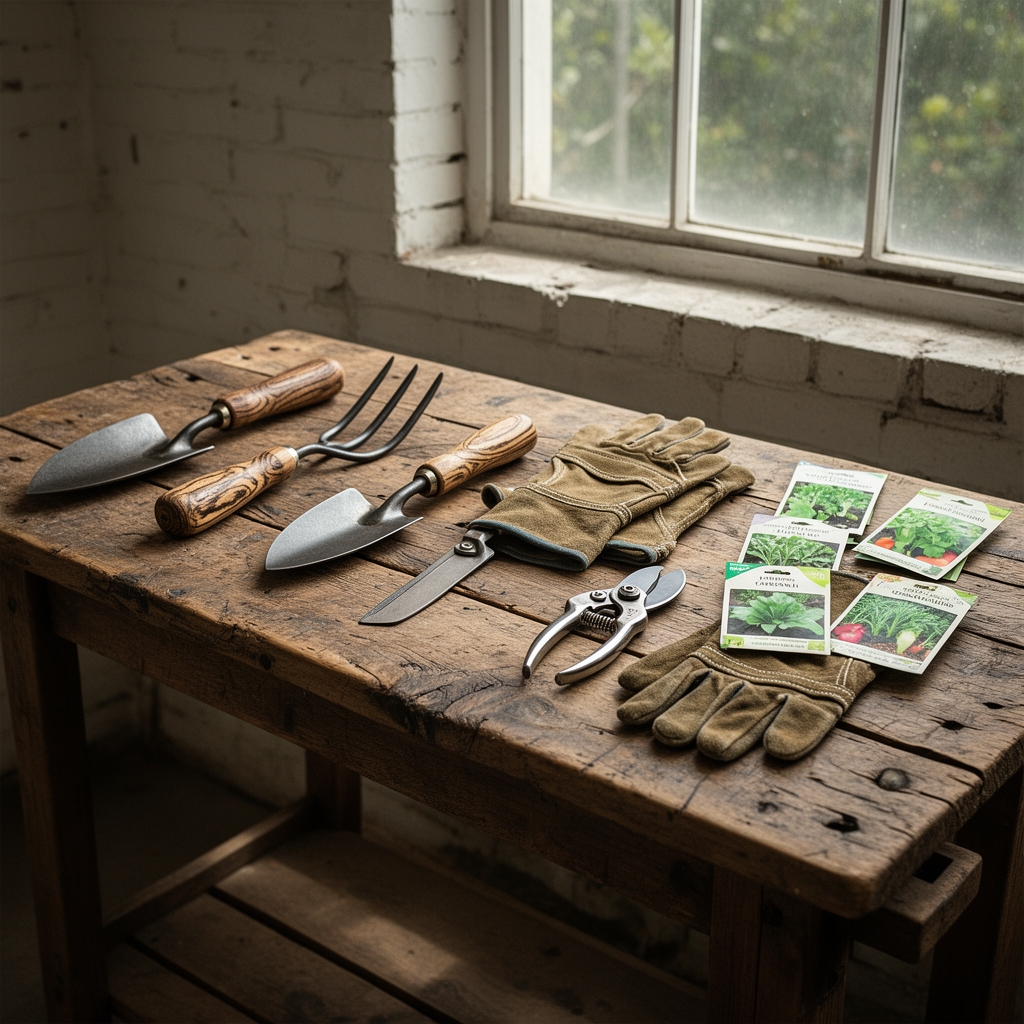
The structural skeleton requires four 8-foot lengths of 2×4 pressure-treated pine for the legs and frame, plus two 4×8-foot sheets of 3/4-inch exterior-grade plywood for the work surface and lower shelf. Galvanized deck screws (3-inch for frame joints, 1.5-inch for plywood attachment) resist the corrosive effects of water and fertilizer salts. The surface benefits from a single coat of non-toxic sealant with a pH of 7.0 to prevent interference with soil chemistry during mixing tasks.
Hardware essentials include eight 3-inch galvanized corner braces, four adjustable leveling feet rated for 500 pounds each, and optional caster wheels if mobility matters. For the working gardener who mixes custom potting blends, a raised lip constructed from 1×3 cedar boards prevents spills of perlite and vermiculite, which improve cation exchange capacity in seedling mixes.
Stock an initial supply of balanced organic fertilizer (4-4-4 NPK ratio), bone meal (3-15-0 for root development), and greensand (0-0-0.1 with trace potassium). Keep spray bottles of diluted hydrogen peroxide (3% solution) for surface sanitation between seeding sessions to minimize damping-off pathogens like Pythium and Rhizoctonia.
Timing
Construction timing aligns with the indoor seed-starting calendar. In Zone 5, begin the build 10 to 12 weeks before the average last frost date (typically mid-May), allowing the table to cure and off-gas any volatile compounds before sowing begins. Gardeners in Zone 7 may start as early as late January for brassicas, while Zone 9 growers focus on heat-lovers like tomatoes and peppers in late winter.
The table's utility peaks during the 8-week window when seedlings require daily monitoring of moisture, light exposure, and ambient temperature. After outdoor transplanting concludes, the surface serves for potting up perennials, rooting hardwood cuttings in autumn, or storing dormant bare-root stock through winter.
Phases
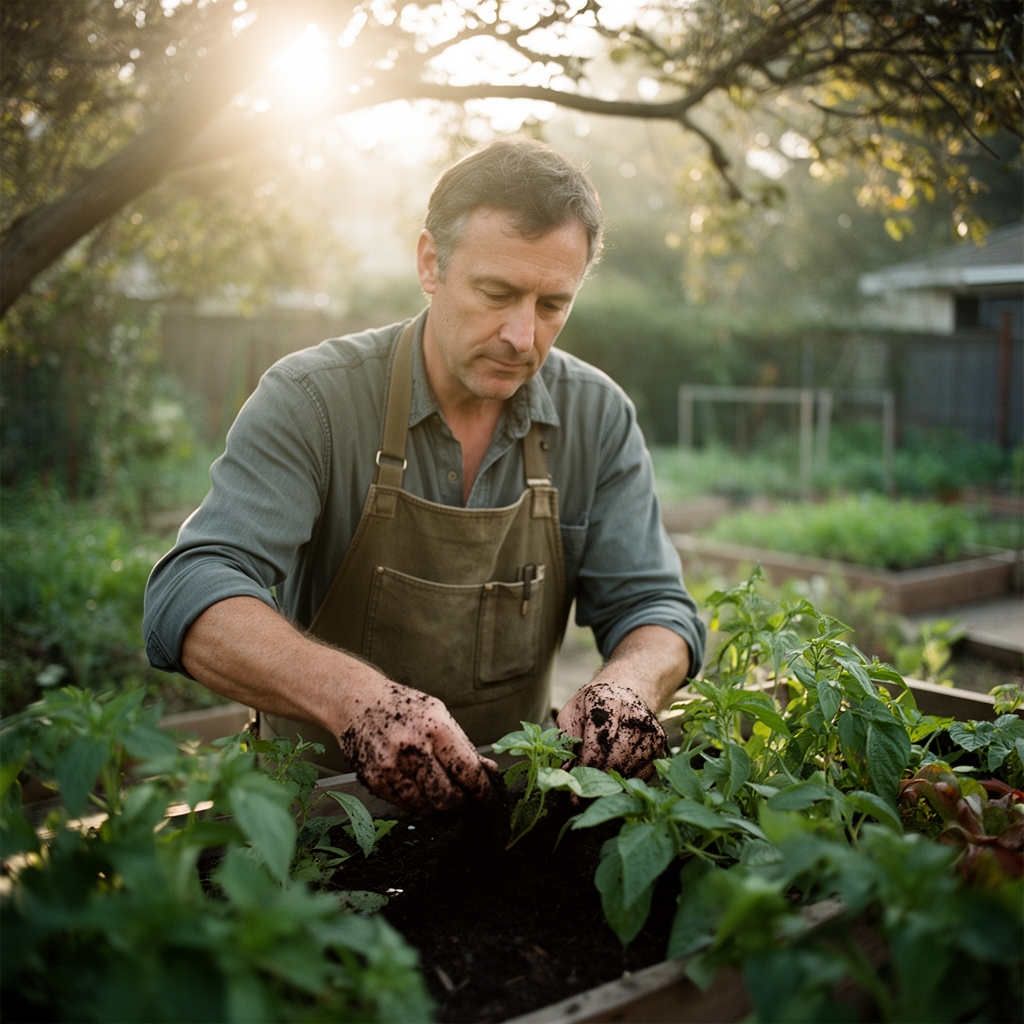
Sowing Phase: Cut the four leg pieces to 36 inches for a standing-height table (adjust to 30 inches for seated work). Assemble the rectangular frame using two 48-inch and two 24-inch crosspieces, creating a footprint that accommodates four standard 1020 trays side by side. Attach corner braces at each joint to counteract racking forces when moving heavy flats. Screw the top plywood sheet flush with the frame's upper edge, then add the raised lip.
Pro-Tip: Drill 1/4-inch drainage holes every 6 inches along the lip's interior edge. This allows excess water from bottom-watering trays to escape, preventing anaerobic conditions that disrupt auxin distribution in young roots.
Transplanting Phase: Install the lower shelf 12 inches above floor level for storage of bagged amendments, hand tools, and empty cell packs. This shelf should support at least 200 pounds. Position it using 2×4 supports screwed into the legs at precise right angles, verified with a framing square. Sand all edges to 1/8-inch radii to prevent splintering when handling delicate seedling trays.
Pro-Tip: Mount a 4-foot shop light fixture with full-spectrum LED bulbs (6500K color temperature) 4 inches above the work surface using adjustable chains. This allows you to raise the light as seedlings mature, maintaining optimal photosynthetic rates without inducing etiolation.
Establishing Phase: Apply leveling feet to each leg, adjusting until a 4-foot spirit level reads true in both directions. An unlevel surface causes water to pool unevenly in cell trays, creating pockets of saturated media where fungal pathogens proliferate. Attach a pegboard panel to the wall behind the table for organizing labels, scissors, and moisture meters within arm's reach.
Pro-Tip: Inoculate the first batch of seedling mix with Glomus intraradices at 1 tablespoon per gallon of media. This arbuscular mycorrhizal species colonizes 80% of vegetable root systems, increasing phosphorus uptake by 300% compared to uninoculated controls.
Troubleshooting
Symptom: Leggy seedlings with pale, elongated stems and widely spaced leaf nodes.
Solution: Lower light fixture to 2 inches above foliage. Increase daily photoperiod to 16 hours. Brush seedlings gently twice daily to stimulate thigmomorphogenesis, which reduces internode length by 20%.
Symptom: White, cottony mold on soil surface, often after watering.
Solution: Increase air circulation with a 6-inch oscillating fan set to low speed. Reduce watering frequency to allow the top 1/4 inch of media to dry between sessions. Sprinkle milled sphagnum moss (pH 3.5-4.5) across the surface as a biological fungicide.
Symptom: Seedlings topple at soil line with brown, constricted stems.
Solution: This damping-off disease requires immediate removal of affected plants. Drench remaining cells with a solution of 1 tablespoon hydrogen peroxide per cup of water. Sterilize tools and the table surface with 10% bleach solution.
Symptom: Purpling of lower leaves on tomato and brassica seedlings.
Solution: Phosphorus deficiency induced by cold media temperatures (below 60°F). Place a seedling heat mat set to 72°F beneath trays. Foliar-feed with liquid fish emulsion (5-1-1) diluted to half-strength every 5 days.
Symptom: Table wobbles despite leveling feet adjustment.
Solution: Floor irregularities exceed adjustment range. Install 1/4-inch rubber shims under short legs. Alternatively, secure the table's rear edge to wall studs using L-brackets, converting it to a cantilevered design that eliminates rear leg-load variability.
Maintenance
Clean the work surface after each seeding session with a stiff brush and spray bottle of diluted vinegar (1 part white vinegar to 3 parts water). This removes soil particles and salt deposits without leaving toxic residues that interfere with germination rates. Once per season, apply a fresh coat of sealant to high-wear zones where trays slide during daily rotation.
Inspect hardware quarterly, tightening any screws loosened by expansion and contraction cycles. Replace corner braces if rust appears, even on galvanized surfaces, as chloride salts from fertilizers accelerate corrosion. Store the table in a climate-controlled space where relative humidity remains below 60% to prevent plywood delamination.
Water discipline matters. Use a turkey baster or pipette to deliver 1/4 cup of water per 72-cell flat when the top surface turns from dark brown to medium brown. This precision prevents the over-saturation that drowns root hairs and creates ideal conditions for Fusarium wilt.
Calibrate the light timer monthly. Seedlings require 14 to 16 hours of illumination daily. Shorter photoperiods trigger premature flowering in long-day crops like spinach, while excessive light wastes electricity and generates heat that stresses cool-season brassicas.
FAQ
What height works best for a seedling work table?
Standard standing height of 36 inches reduces back strain during the repetitive tasks of seeding, pricking out, and potting up. Seated gardeners should build to 30 inches with a compatible stool.
Can I use untreated lumber instead of pressure-treated wood?
Yes, if the table remains indoors in low-humidity conditions. Untreated pine degrades within two seasons in damp basements or unheated garages where moisture exceeds 70% relative humidity.
How much weight must the table support?
Four 1020 trays filled with moist seedling mix, plug cells, and mature transplants total approximately 80 pounds. Add 50 pounds for tools and amendments. Design for a 200-pound distributed load with a safety factor of 2.5.
Do seedlings need bottom heat on the work table?
Warm-season crops (tomatoes, peppers, eggplants) germinate best at 75 to 85°F. A thermostat-controlled heat mat raises media temperature without overheating ambient air, which can cause excessive transpiration and wilting.
Should the table have a waterproof surface?
A sealed plywood surface resists moisture but allows the wood to breathe, preventing trapped humidity that warps the substrate. Avoid laminate or tile, which create impermeable barriers that trap condensation and promote fungal growth along joints.