8 High-Yield Steps to Prepare a Nut and Vegetable Garden
Learning how to prepare a garden for a nut and vegetable garden begins with understanding that nut trees and annual vegetables demand fundamentally different soil structures, root zones, and nutrient cycling. Nut trees such as hazelnut, almond, and walnut require deep, well-drained profiles extending 4 to 6 feet, while companion vegetables like tomatoes and beans thrive in the top 12 to 18 inches. The preparation process integrates both requirements into a single, productive ecosystem. Success depends on sequencing soil amendments, timing interventions to match phenological stages, and establishing symbiotic relationships between woody perennials and annual crops.
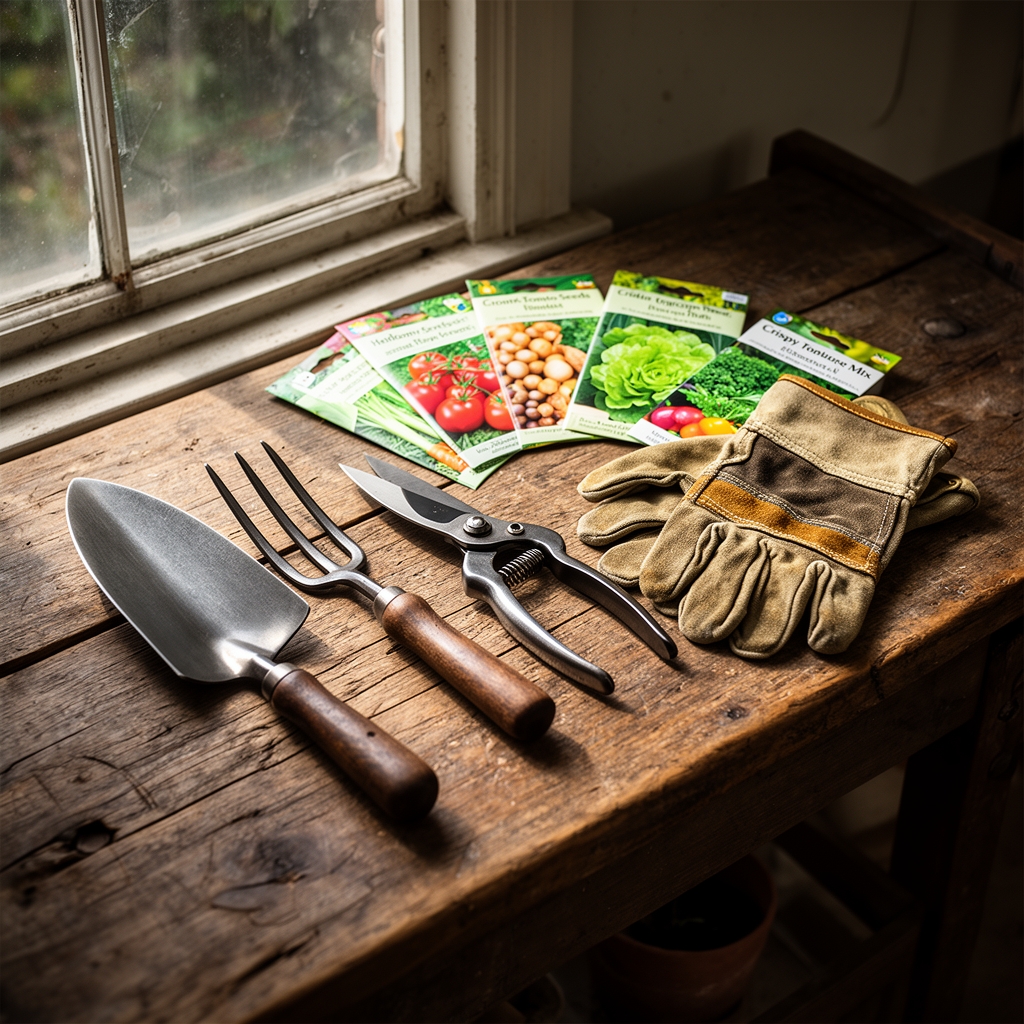
Materials
Target soil pH between 6.0 and 7.0 for most nut species. Hazelnuts tolerate 5.5, while almonds prefer 7.0 to 7.5. Use a calibrated digital pH meter rather than paper strips for accuracy within 0.1 pH units.
Apply 4-4-4 organic fertilizer at 2 pounds per 100 square feet during initial bed preparation. This balanced NPK ratio supports both lignin production in nut trees and leaf growth in vegetables. Add rock phosphate at 5 pounds per 100 square feet if soil tests reveal phosphorus below 30 ppm. Bone meal works faster but depletes within one season.
Incorporate 2 to 3 inches of aged compost to raise cation exchange capacity above 10 meq/100g. High CEC soils buffer pH shifts and retain calcium, magnesium, and potassium against leaching. Avoid fresh manure within 120 days of vegetable harvest due to pathogen risk.
Source mycorrhizal inoculant containing Glomus intraradices and Rhizophagus irregularis. Nut trees form ectomycorrhizal associations; vegetables form arbuscular types. Mixed inoculants address both.
Acquire gypsum (calcium sulfate) if sodium levels exceed 100 ppm or if clay content surpasses 40 percent. Gypsum flocculates clay particles without raising pH, improving water infiltration to 1 inch per hour.
Timing
Zones 6 through 9 offer the widest planting windows. Bare-root nut trees establish best when planted 4 to 6 weeks before the last spring frost date. Dormant roots initiate auxin distribution once soil temperatures reach 45°F at 6 inches depth.
In Zone 7, plant hazelnuts and chestnuts between late February and mid-March. Almonds require Zones 8 to 9 and tolerate planting through early April. Delay until after the frost-free date risks transplant shock during leafout.
Prepare vegetable beds 2 weeks after nut tree installation. This sequence allows root disturbance to settle and prevents competition during the critical establishment phase. Sow cool-season crops such as lettuce, peas, and spinach when soil reaches 40°F. Warm-season tomatoes, peppers, and beans require 60°F soil temperature.
Phases
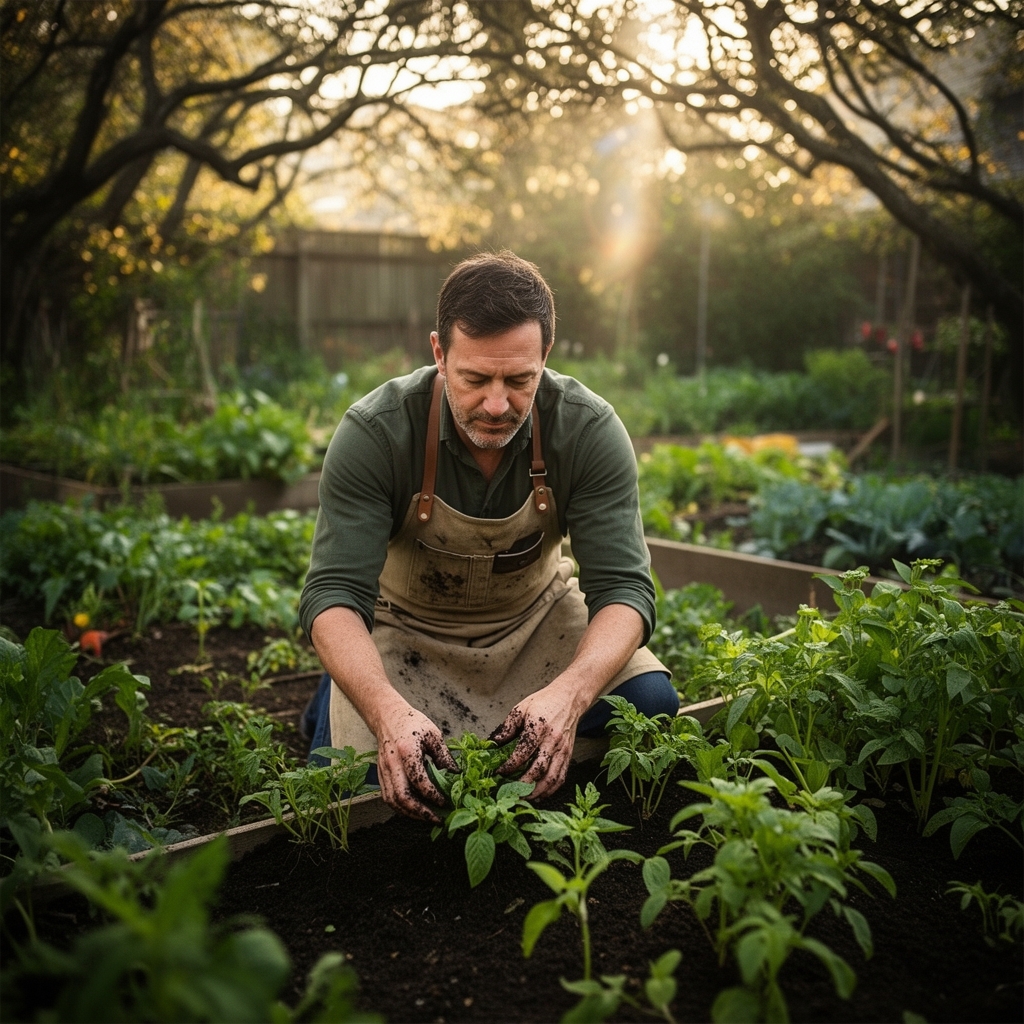
Sowing
Mark nut tree locations 15 to 20 feet apart to accommodate mature canopy spread. Dig planting holes twice the root ball width and equal to root ball depth. Deeper holes encourage settling and root collar rot.
Spread mycorrhizal inoculant directly on exposed roots at 1 teaspoon per tree. Backfill with native soil rather than amended mixes. Abrupt texture changes at the hole boundary impede lateral root expansion.
Pro-Tip: Score container-bound roots with vertical cuts 1 inch deep at four compass points. This severs circling roots and stimulates radial growth within 3 weeks.
Transplanting
Move vegetable seedlings to garden beds when they develop true leaves and nighttime temperatures stay above 50°F for warm-season crops. Space tomatoes 24 inches apart, beans 4 inches apart in rows 18 inches wide.
Bury tomato stems up to the lowest true leaves. Adventitious roots form along buried stem tissue, increasing nutrient uptake by 30 percent compared to shallow planting.
Water transplants with a solution of 1 tablespoon fish emulsion per gallon. The 5-1-1 NPK ratio provides nitrogen for foliar expansion without encouraging excessive vegetative growth.
Pro-Tip: Transplant on overcast days or after 4 PM. Reduced solar radiation lowers transpiration stress and prevents wilting during the 48-hour root reestablishment period.
Establishing
Mulch nut tree root zones with 3 inches of wood chips, keeping material 6 inches from the trunk. Mulch moderates soil temperature fluctuations, retains moisture, and suppresses competing grasses that exude allelopathic compounds.
Apply 10-10-10 fertilizer to vegetable rows at 1 pound per 100 square feet 4 weeks after transplanting. Side-dress 6 inches from stems to avoid foliar burn.
Monitor nut tree shoot growth. Terminal shoots extending 12 to 18 inches during the first season indicate successful establishment. Less than 6 inches suggests root damage or inadequate water.
Pro-Tip: Prune nut tree branches at 45-degree angles 1/4 inch above outward-facing buds. This angle sheds water, reduces disease entry points, and directs auxin flow to promote lateral branching.
Troubleshooting
Symptom: Interveinal chlorosis on young leaves.
Solution: Iron deficiency caused by pH above 7.5. Apply chelated iron at 1 tablespoon per gallon as a foliar spray. Lower soil pH with elemental sulfur at 1 pound per 100 square feet.
Symptom: Blossom end rot on tomatoes.
Solution: Calcium deficiency exacerbated by irregular watering. Maintain consistent soil moisture at 1 inch per week. Foliar calcium sprays provide temporary relief but do not address root uptake issues.
Symptom: Nut tree leaves with brown margins and premature drop.
Solution: Phytophthora root rot from poor drainage. Improve infiltration by installing French drains or raising beds 12 inches. Fungicide applications fail once infection establishes in cambium tissue.
Symptom: Aphid colonies on vegetable shoot tips.
Solution: Release ladybugs at 1,500 per 1,000 square feet. Each adult consumes 50 aphids daily. Avoid broad-spectrum insecticides that eliminate predator populations.
Symptom: Walnut trees with sparse foliage and dieback.
Solution: Walnut anthracnose from Gnomonia leptostyla. Remove infected branches during dormancy. Apply copper fungicide at bud break and repeat every 14 days through leafout.
Maintenance
Water nut trees with 10 gallons per week during establishment years. Transition to deep irrigation of 20 gallons every 2 weeks once roots extend beyond the drip line. Deep watering encourages downward root growth to access subsoil moisture reserves.
Provide vegetables with 1 inch of water per week, measured with rain gauges rather than estimated. Sandy soils may require 0.5 inches every 3 days to prevent stress.
Reapply 4-4-4 organic fertilizer to nut trees each spring at 3 pounds per 100 square feet. Split applications reduce leaching losses by 40 percent compared to single heavy doses.
Rotate vegetable families annually to disrupt soilborne pathogen cycles. Follow tomatoes with legumes to restore nitrogen depleted by fruiting crops. Avoid planting brassicas after radishes due to shared clubroot susceptibility.
Prune nut trees during late winter dormancy. Remove water sprouts, crossing branches, and wood older than 5 years that shows declining productivity. Target 30 percent canopy thinning to improve light penetration and air circulation.
FAQ
When should I plant nut trees relative to vegetable beds?
Install nut trees 2 to 4 weeks before preparing vegetable beds. This sequence prevents root competition during the critical establishment window when trees allocate 70 percent of carbohydrate reserves to root growth.
Can I grow vegetables under nut tree canopies?
Shade-tolerant crops like lettuce and spinach succeed under 50 percent canopy cover. Full-sun vegetables require 8 hours of direct light. Plant these crops south of nut trees where shading occurs only in early morning.
What NPK ratio works for both nuts and vegetables?
A 4-4-4 balanced organic formula supports both crop types during establishment. Increase phosphorus to 5-10-5 for fruiting vegetables. Mature nut trees tolerate lower nitrogen ratios like 3-1-2.
How deep should I prepare soil for nut trees?
Loosen soil to 24 inches depth in a 6-foot diameter circle. Deeper preparation does not improve establishment and may bury topsoil organic matter below the rooting zone.
Do nut trees require cross-pollination?
Hazelnuts and chestnuts need two cultivars for adequate pollination. Almonds vary by cultivar; 'All-in-One' sets nuts without a pollinator. Space pollinizers within 50 feet for effective pollen transfer by wind or insects.